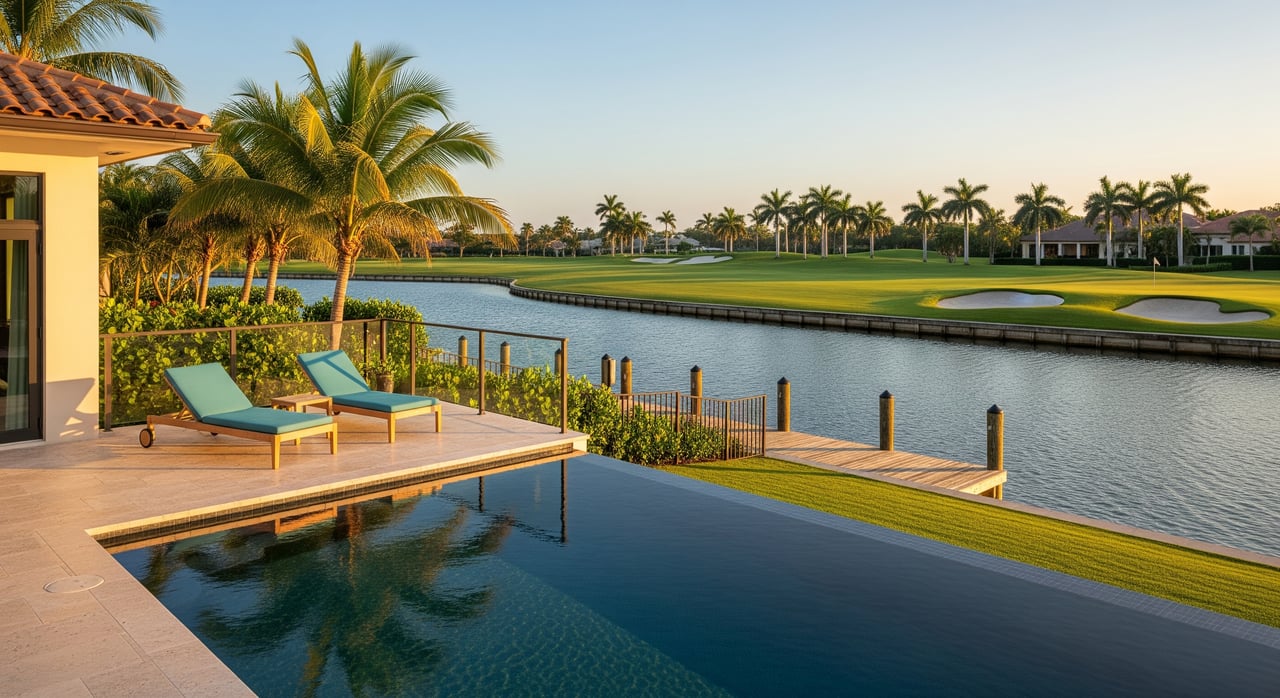
Choosing between a waterfront home and a golf community home in Palm Beach Gardens can feel like comparing two great lifestyles. You want the right fit, the right value, and a smooth path to closing. In this guide, you’ll learn how inventory, price per square foot, and days on market differ for each, plus how seasonality and negotiation play out locally. You’ll also get practical steps to read the data and time your move with confidence. Let’s dive in.
What counts as waterfront vs golf
Waterfront homes include properties with direct water frontage or private water access. In Palm Beach Gardens, that can mean Intracoastal Waterway or marina access, canal frontage, and lakefront. For clear comparisons, group canal and lakefront with other waterfront types, and note when a property has true deep-water or Intracoastal access.
Golf homes include properties inside or immediately adjacent to an active golf course, or within a named golf community such as PGA National or BallenIsles. Include homes throughout the community, even if they are not on a hole, as long as the community is golf focused.
Define your timeframe before you compare. A rolling 12 months is standard. Then add 3- and 5-year views to see how trends are shifting over time.
Inventory patterns to expect
Inventory tends to look different for these two lifestyles:
- Waterfront inventory is usually smaller. Palm Beach Gardens has limited true waterfront frontage, so there are fewer total listings. Scarcity shapes pricing and competition.
- Golf communities offer more supply. These neighborhoods include many single-family homes plus villas and condos, which means more overall choice across price points.
- Months of supply can diverge. When buyers arrive in peak season, desirable waterfront homes can move quickly, while golf communities often see steady year-round activity with a seasonal bump.
Use the same property type filters for both groups to keep the comparison fair.
Price per square foot realities
Waterfront homes generally command a higher price per square foot than golf homes. The premium reflects water access and view, and it is most pronounced for deep-water or Intracoastal properties. Price per foot can vary widely based on:
- Dock depth, seawall condition, and marina access
- Lot orientation, width, and view corridor
- Age of the home and level of hurricane retrofitting
- Recent renovations and overall finish level
Golf homes often price above typical inland properties, but usually below direct waterfront. Membership fees, HOA dues, and the health of the club can influence effective affordability and market depth.
To get an apples-to-apples picture, compare median price per foot in defined price bands, such as entry, mid, and luxury tiers.
Days on market and seasonality
South Florida has a clear “snowbird” cycle. Buyer demand and listing activity typically rise from late fall through spring, and ease in summer. This seasonality matters for both lifestyles, but it shows up differently:
- Waterfront homes often see compressed days on market during peak winter months as seasonal and second-home buyers are in town.
- Golf communities see strong winter activity as well, but maintain steadier interest the rest of the year thanks to full-time residents and amenity-driven demand.
For context on county-level cycles and monthly patterns, review the market data provided by Florida Realtors. Visitor peaks that correlate with seasonal buyers are visible in local tourism calendars like Visit Palm Beach.
Best times to list
- Waterfront sellers: Late fall to early winter can maximize exposure to the largest buyer pool and support stronger terms.
- Golf community sellers: Late fall through spring is ideal, though competitively priced homes can perform in summer when there is less competing inventory.
Buyer timing tips
- If you want more negotiating room, look during late summer. You may find longer days on market and motivated sellers.
- If you want the best selection, shop in early winter and be ready to act quickly.
Negotiation dynamics for waterfront homes
Waterfront properties bring unique underwriting and negotiation factors that can affect timing and price:
- Insurance and cost of ownership. Premiums for wind and flood coverage are often higher on the water. Track policy availability and pricing trends with the Florida Office of Insurance Regulation and Citizens Property Insurance. These costs can shape buyer budgets and negotiations.
- Flood zones and appraisals. Waterfront locations are more likely to be in Special Flood Hazard Areas. Confirm zones through the FEMA Map Service Center. Limited comparable sales for unique lots can create appraisal challenges, which sometimes lead to appraisal gaps.
- Seawall and dock condition. Inspections often focus on seawalls, docks, and boat lifts. Repair or replacement costs can be significant and may lead to credits or price adjustments. Review permit history and environmental requirements with Palm Beach County Environmental Resources Management and the Florida DEP.
- Closing timelines. Any permitting questions or insurance underwriting issues can add time. Plan for thorough due diligence and clear communication.
Negotiation dynamics for golf homes
Golf community homes have their own set of levers and disclosures:
- HOA and club fees. Mandatory memberships, initiation fees, monthly dues, and special assessments matter to your bottom line. Full disclosure of current fees and any planned assessments helps reduce friction later.
- Financing. High dues and memberships can affect debt-to-income ratios for financed buyers, which can influence pre-approvals and timelines.
- Course and community health. The state of the course, clubhouse projects, and reserve funding can impact desirability and long-term stability. If redesigns are planned, buyers may negotiate for potential disruptions.
- Comparable sales. Golf communities often have more comps, which can smooth appraisals but also anchor pricing more tightly to recent sales.
Due diligence checklists that protect you
A few targeted checks can prevent surprises and support cleaner negotiations.
For waterfront buyers
- Verify flood zone and insurance requirements through FEMA’s map center.
- Get insurance quotes early and monitor market conditions with the Florida Office of Insurance Regulation and Citizens Property Insurance.
- Order specialized inspections for seawalls, docks, and lifts; review permits with Palm Beach County ERM and the Florida DEP.
- Confirm parcel data, setbacks, and recorded easements through the Palm Beach County Property Appraiser’s site, PAPA.
For golf community buyers
- Review HOA documents, budgets, reserve studies, and meeting minutes for planned assessments and rules.
- Confirm current membership requirements, initiation fees, and transfer policies in writing.
- Verify comparable sales and DOM patterns in your price tier to set expectations.
- Cross-check parcel records and any past improvements via PAPA.
For sellers in both groups
- Pre-listing inspections can surface issues early. For waterfront, include seawall and dock checks. For golf homes, gather complete HOA and club fee documentation.
- Prepare recent insurance details and any mitigation upgrades. Clear, organized disclosure builds buyer confidence.
- Stage and price for the season. Align your list date with expected traffic while monitoring monthly market data from Florida Realtors.
How to read the data like a pro
You can compare waterfront and golf trends with a simple, repeatable approach. If you have MLS access through the local association, great. If not, work with an agent who does.
- Define the sample
- Geography: Palm Beach Gardens city limits.
- Property type: separate single-family from condos and townhomes.
- Timeframe: last 12 months. Add 3- and 5-year comparisons for context.
- Run two parallel queries
- Query A: Waterfront homes using the MLS “Waterfront” field, including canal and lakefront, and tag Intracoastal where possible.
- Query B: Golf homes using the MLS golf community fields or known communities.
- Extract key metrics
- Inventory: active listings, new listings per month, months of supply.
- Prices: median sale price, median list price, and median price per square foot.
- Speed: median days on market, plus the share sold within 30, 60, and 90 days.
- Price movement: percent of list price received and percent of listings with reductions.
- Buyer mix: cash share and common loan types to gauge appraisal dynamics.
- Segment by price tier
- Group results into entry, mid, and luxury tiers. This keeps waterfront’s luxury skew from masking trends in the mid-market.
For additional metro and county context, review reports from Florida Realtors. If you need MLS access or want to understand the exact filters used locally, connect with the Realtor Association of the Palm Beaches and Greater Fort Lauderdale, RAPB + GFLR.
Which holds value better
Both property types can perform well over time, but for different reasons.
- Waterfront benefits from true scarcity. Limited frontage and lifestyle demand support long-term value. That said, higher ownership costs and flood risk can narrow the buyer pool during certain cycles.
- Golf homes lean on community stability. Strong amenities, good reserves, and reasonable fees support steady interest and more predictable comps. Community health matters, especially when clubs pursue upgrades or redesigns.
Your best choice depends on how you plan to use the home, your budget for ownership costs, and your comfort with each set of risks.
Work with a local advisor
Whether you are weighing dock depth and flood zones or comparing membership options across golf communities, local details drive outcomes. You deserve guidance that blends lifestyle fit with clean, confident closings. With a title-industry background and team-backed marketing, I help you get clarity on insurance, permitting, HOA rules, and market timing so you can move forward with confidence. Ready to talk through your plan? Connect with Kristen Reilly.
FAQs
What is included in a Palm Beach Gardens waterfront home?
- Properties with direct water frontage or private water access, including Intracoastal, canal, and lakefront locations; confirm specifics in the MLS waterfront fields.
Are golf community homes counted if they are not on the fairway?
- Yes, homes inside or adjacent to an active golf course or within a named golf community are included, even if the lot is not on a hole.
When is the best season to list a waterfront home?
- Late fall through winter typically captures the largest seasonal buyer pool, which can shorten days on market and support stronger terms.
How do insurance costs affect waterfront negotiations?
- Higher wind and flood premiums can reduce purchasing power and influence price and credits; review market conditions through the Florida Office of Insurance Regulation and Citizens Property Insurance.
What documents should I review for a golf community purchase?
- HOA covenants, budgets, reserve studies, fee schedules, membership requirements, and board minutes to spot upcoming assessments or rule changes.
Where can I confirm flood zones for a property?
- Use the FEMA Map Service Center to verify flood zone designations and discuss insurance needs with your agent and insurer.
How can I verify permits or environmental issues for docks and seawalls?
- Check records with Palm Beach County Environmental Resources Management and the Florida DEP to confirm history and requirements.
What metrics should I track to compare waterfront and golf trends?
- Focus on months of supply, median price per square foot, median days on market, percent of list price received, price reductions, and cash share to see how each market is moving.
Where can I find county and metro housing reports?
- Review monthly data and trends from Florida Realtors for Palm Beach County context and seasonality.
Do appraisals pose more risk for unique waterfront properties?
- Yes, unique lots often have fewer comparable sales, which can lead to conservative valuations and potential appraisal gaps that you should plan for in offers.