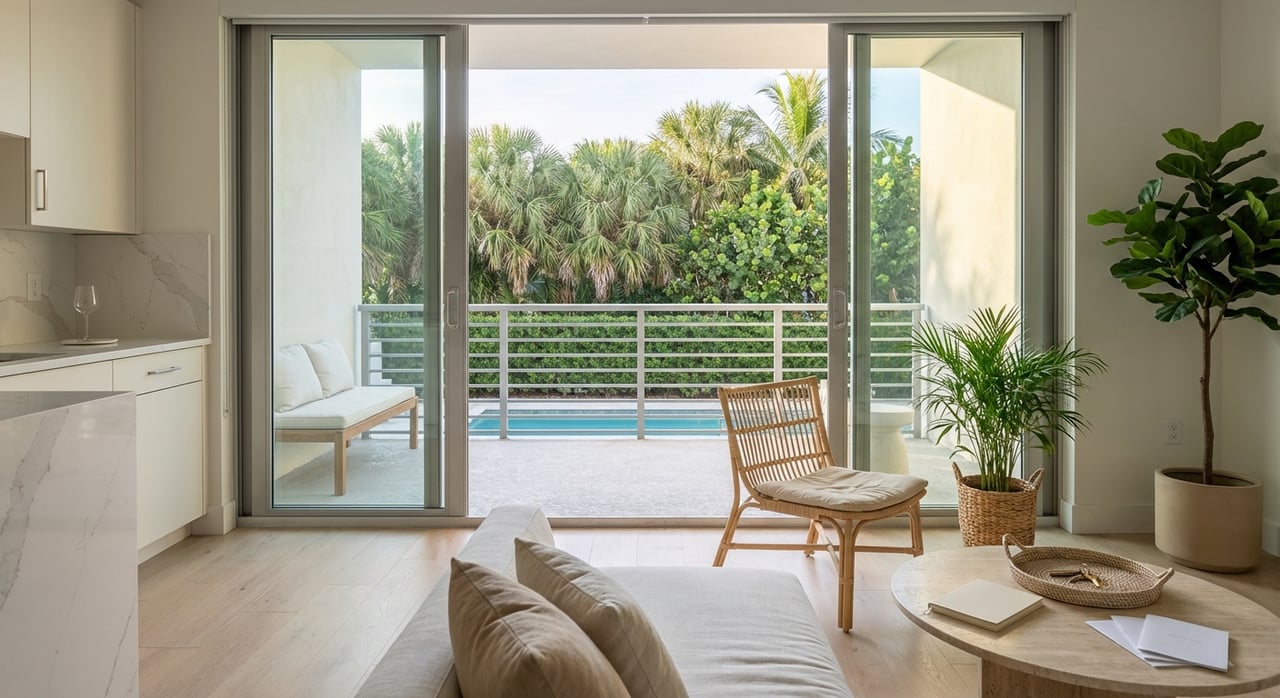
Thinking about turning your Boynton Beach condo into a winter escape for seasonal guests? You are not alone. With steady snowbird demand and miles of coastline, Boynton Beach can be a smart place to offer monthly or multi‑month stays. In this guide, you will learn how to confirm building rules, meet city, county, and state requirements, plan for costs, and underwrite income with confidence. Let’s dive in.
Will your building allow it?
Before you run numbers or post a listing, confirm your association’s rules. Condo and HOA documents set the ground rules for lease length, frequency, approvals, and deposits.
- Request the full set of governing documents: declaration, bylaws, and current rules.
- Ask for the current budget, reserve study, insurance summaries, and recent meeting minutes.
- Review lease terms: minimum stay length, required approvals, background checks, and any caps on the number of rentals.
- Confirm move‑in and move‑out procedures, parking limits, elevator reservations, and damage deposits.
Know how Florida law treats new rental restrictions:
- For condominiums, Florida Statute 718.110(13) generally prevents a newly adopted amendment that restricts rentals from applying to current owners who do not consent. These changes usually apply to future buyers.
- For HOAs, Florida Statute 720.306(1)(h) protects existing owners from most new rental restrictions enacted after July 1, 2021, but allows associations to apply community‑wide limits on rentals shorter than six months or more than three rentals per year.
If the rules are not clear, ask for an estoppel letter and speak with the association manager so you have written guidance before you plan your rental calendar.
City and county rules you must follow
Palm Beach County and the City of Boynton Beach have specific steps for short‑term and seasonal rentals. Get these done before you list to avoid fines or account deactivations.
Florida DBPR licensing
Many short‑term operations meet the definition of a public lodging establishment under Chapter 509. If you rent more than three times a year for periods under 30 days, you likely need a DBPR vacation rental license and must follow life‑safety and sanitation standards. Review Chapter 509, Florida Statutes to confirm whether your use requires licensing.
Palm Beach County TDT and sales tax
Palm Beach County collects a 6% Tourist Development Tax on rentals of six months or less. This is in addition to Florida sales tax and the county surtax. The county states that platforms may not remit TDT on your behalf, so hosts must register, file monthly returns, and display account details on listings. See the county’s guidance on Tourist Development Tax registration and monthly filing.
City of Boynton Beach registration
As of October 1, 2023, Boynton Beach treats properties rented more than three times per calendar year for less than 30 days as vacation rentals. These units must register with the city and meet local operational rules, including having a responsible local contact and following occupancy and parking standards. Review the city’s short‑term rental requirements and registration process. Local news coverage also summarizes the ordinance and enforcement focus on nuisance reduction; see WLRN’s overview of Boynton Beach short‑term rental rules.
A practical compliance sequence
- Verify your association allows your intended rental term and frequency.
- If transient, apply for any required DBPR vacation rental license and obtain a state sales tax account.
- Register for Palm Beach County TDT, obtain your local Business Tax Receipt, and plan for monthly filings, even for zero revenue months.
- Apply with the City of Boynton Beach via the permitting portal and designate your local responsible party.
Seasonal demand and pricing strategy
Boynton Beach is a classic snowbird market. Demand typically peaks from December through March, with solid interest from November through April. Summer and hurricane season see softer demand. This pattern rewards owners who focus on longer winter bookings and adjust pricing in shoulder months.
A simple approach:
- Lead with monthly or multi‑month winter stays for steady revenue and lower turnover.
- Offer weekly or nightly options only where allowed by your building and local rules.
- Set rates by season. Peak months command higher pricing. Shoulder months can attract longer stays with modest discounts.
- Open your calendar early. Snowbird guests often book months ahead for the next winter.
Palm Beach County’s robust visitor base, which helps fund destination promotion through the TDT, supports this seasonal rhythm. You can reference the county’s TDT program for context around tourism’s scale and importance.
Costs to expect
The right setup makes a big difference in guest reviews and profitability. Build a realistic budget for furnishings, management, insurance, and safety.
Furnishings and setup
Plan a one‑time furnishing budget that fits your unit size and quality level. Industry breakdowns show a broad range, from roughly 5,000 dollars for a well‑equipped studio or one‑bedroom to 20,000 dollars or more for larger two to three bedroom spaces with higher‑end finishes. Review a room‑by‑room estimate and gather quotes using a guide like this Airbnb furnishing cost breakdown. Include durable linens, a stocked kitchen, beach gear, and hurricane supplies.
Management and staffing
Absentee owners often choose professional management. Industry summaries place full‑service short‑term rental fees in the 20 to 35 percent range of gross revenue, while limited‑scope or marketing‑only services can land near 8 to 15 percent. Compare scope: guest communications, pricing, linens, restocking, emergency response, maintenance coordination, and distribution across booking sites. For fee benchmarks and inclusions, review this complete breakdown of STR management costs.
Insurance and safety
Florida insurance costs have been volatile. Confirm what your association’s master policy covers and insure your own interior, contents, and liability with an HO‑6 or similar policy. Ask about loss of rental income coverage for hurricane closures or evacuations. For context on recent market conditions, see Insurance Journal’s update on Florida insurance trends.
Life‑safety items are required for licensed vacation rentals, including smoke and CO detectors, fire extinguishers, and clear egress. Review DBPR’s rules for public lodging establishments to prepare for inspections and compliance needs. A good starting point is the Florida Administrative Code overview.
Underwrite the numbers
Ground your investment thesis in data. Collect inputs, run a few scenarios, and stress test for low season and hurricane closures.
Key inputs to gather:
- Unit details: bedrooms, baths, sleeping capacity, and proximity to the beach or Intracoastal.
- Building rules: minimum lease term, rental caps, and any approval timelines.
- Market comps: average nightly rates and occupancy by month for your micro‑market.
- Fixed costs: HOA dues, property tax, insurance, utilities, management fees, maintenance reserves.
- Variable costs: cleanings per turnover, linens, restocking, laundry.
- Taxes and fees: Palm Beach County TDT at 6 percent, Florida sales tax plus county surtax, and platform or payment processing fees.
- Risk reserves: set aside for hurricane closures and off‑season vacancies.
Simple formulas:
- Gross potential revenue (annual) equals the sum of monthly ADR times nights in month times occupancy.
- Net revenue after guest taxes equals gross revenue minus the TDT and sales tax on taxable receipts.
- Net operating income equals net revenue after guest taxes minus HOA, insurance, property tax, utilities, management, cleaning, and reserves. For tax details, revisit the county’s TDT guidance.
Illustrative example only:
- Scenario: a two bedroom near the coast offers monthly winter bookings and some weekly peak nights. Assume a blended 150 dollars ADR and 55 percent annual occupancy. That implies roughly 30,000 dollars in gross potential revenue. After guest taxes near 13 percent, a 25 percent full‑service management fee, cleaning turnover costs, HOA dues in a midrange band, and insurance, taxes, and utilities, your NOI will depend heavily on precise building costs and your actual ADR and occupancy by month. The point is clear. Taxes, management fees, and HOA or insurance costs are major line items that shape net returns.
Run three scenarios:
- Peak‑weighted plan that leans into December through March with strong ADR and monthly stays.
- Conservative plan with 35 to 45 percent annual occupancy and leaner ADR.
- Monthly‑focused plan that targets two to four month winter bookings with lower turnover and cleaning.
Hurricane season planning
Hurricane season runs June through November. Build plans and reserves into your model.
- Confirm shutters, impact glass, and any building protocols for storm prep.
- Add a hurricane closure reserve and set clear booking policies for named storms.
- Verify that your HOA and HO‑6 policies include loss assessment and loss of rental income options where available.
- Coordinate with your manager or local contact for pre‑ and post‑storm checklists.
Local resources and links
- City of Boynton Beach short‑term rental requirements and registration: official city guidance
- Palm Beach County Tourist Development Tax: registration and monthly filing
- Florida vacation rental licensing and rules: Chapter 509, Florida Statutes
- Condo rental restriction amendments: 718.110(13)
- HOA rental restriction amendments: 720.306(1)(h)
- Furnishing cost guide: room‑by‑room estimate
- STR management fee overview: cost breakdown and scope
- Life‑safety rules reference: Florida Administrative Code summary
If you want a second set of eyes on building documents, or you would like help mapping out the licensing and tax steps, reach out. With local coastal expertise and closing fluency, I can help you set up a compliant, guest‑ready seasonal rental strategy in Boynton Beach. Connect with Kristen Reilly to get started.
FAQs
Can I rent my Boynton Beach condo for a week in winter?
- Possibly, but check your condo documents first. If you rent more than three times per year for periods under 30 days, Boynton Beach’s short‑term rules and likely state licensing apply. See the city’s requirements.
What taxes do I need to collect and remit on seasonal rentals?
- Palm Beach County charges a 6 percent Tourist Development Tax on rentals six months or less, plus Florida sales tax and local surtax. Register and file monthly, as platforms may not remit TDT for the county. Review the TDT guidance.
Will my association allow nightly rentals?
- It depends on your governing documents. New condo rental bans generally do not apply to current owners who do not consent per 718.110(13). HOAs have different rules under 720.306(1)(h).
How much will it cost to furnish and manage my condo?
- Plan 5,000 to 20,000 dollars or more for furnishings, based on size and quality. Full‑service short‑term rental management often runs 20 to 35 percent of gross revenue. See this furnishing guide and management fee overview.
How should I model winter monthly bookings versus nightly stays?
- Build two calendars. Use higher ADR and occupancy for December through March and reduce turnover for month‑long stays. Include guest taxes, HOA dues, insurance, management, cleaning, and a hurricane reserve in every scenario. Revisit the county’s TDT page for tax inputs.